Introduction:1. History of Artificial intelligence 2. What is Artificial intelligence 3.scope of Artificial intelligence 4.general perception of the people about robots 5.Artifical Intelligence Vs Emotional Intelligence 6.Advantages 7.Disadvantages 8.FUTURE OF AI
1.HISTORY OF AI
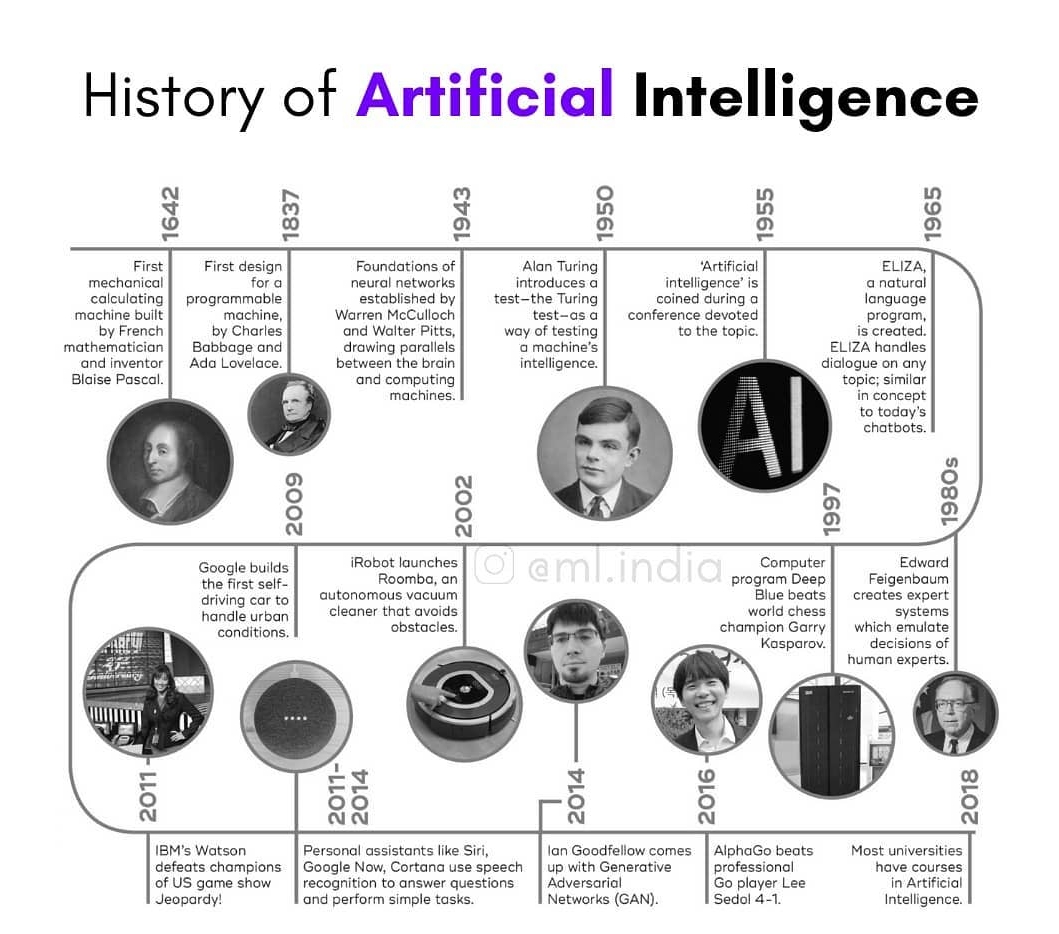
We now live in the age of “big data,” an age in which we have the capacity to collect huge sums of information too cumbersome for a person to process. The application of artificial intelligence in this regard has already been quite fruitful in several industries such as technology, banking, marketing, and entertainment. We’ve seen that even if algorithms don’t improve much, big data and massive computing simply allow artificial intelligence to learn through brute force. There may be evidence that Moore’s law is slowing down a tad, but the increase in data certainly hasn’t lost any momentum. Breakthroughs in computer science, mathematics, or neuroscience all serve as potential outs through the ceiling of Moore’s Law.
The Future
So what is in store for the future? In the immediate future, AI language is looking like the next big thing. In fact, it’s already underway. I can’t remember the last time I called a company and directly spoke with a human. These days, machines are even calling me! One could imagine interacting with an expert system in a fluid conversation, or having a conversation in two different languages being translated in real time. We can also expect to see driverless cars on the road in the next twenty years (and that is conservative). In the long term, the goal is general intelligence, that is a machine that surpasses human cognitive abilities in all tasks. This is along the lines of the sentient robot we are used to seeing in movies. To me, it seems inconceivable that this would be accomplished in the next 50 years. Even if the capability is there, the ethical questions would serve as a strong barrier against fruition. When that time comes (but better even before the time comes), we will need to have a serious conversation about machine policy and ethics (ironically both fundamentally human subjects), but for now, we’ll allow AI to steadily improve and run amok in society.
Rockwell Anyoha is a graduate student in the department of molecular biology with a background in physics and genetics. His current project employs the use of machine learning to model animal behavior. In his free time, Rockwell enjoys playing soccer and debating mundane topics.
2.WHAT IS AI ?
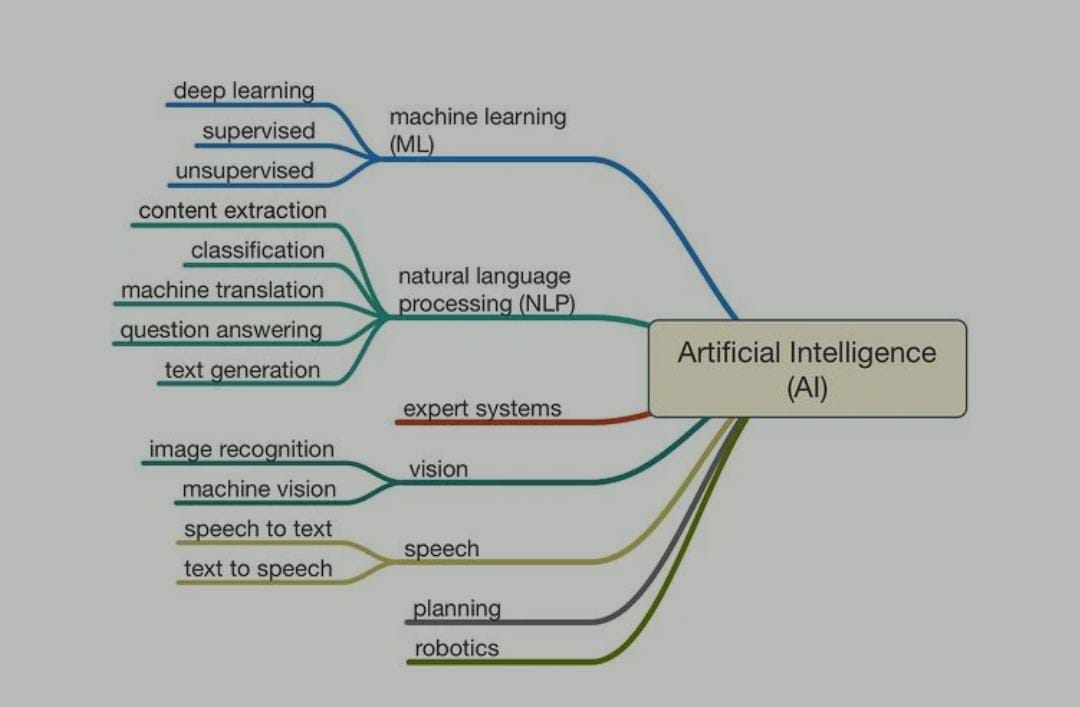
The ability of a digital computer or computer controlled robot to perform tasks commonly associated with intelligent beings.The term is frequently applied to the project of developing systems endowed with the humans,such as the ability to reason,discover meaning,generalize,or learn from past experience.Since the development of the digital computer in the computer in the computers can be programmed to carry out very complex tasks,for example discovering proofs for mathematical theroms or playing chess – with great proficiency.still ,despite continuing advance in computer processing speed and memory capacity,there are as yet no programs that can match human flexibility over wider domains or in tasks requiring much everyday knowledge on the other hand,some programs have attained the perfomance levels of human experts and professionals in performing certain specific tasks, so that artificail intelligence in this limited sense is found in applications as diverse as medical.
3.SCOPE OF ARTIFICAIL INTELLIGENCE
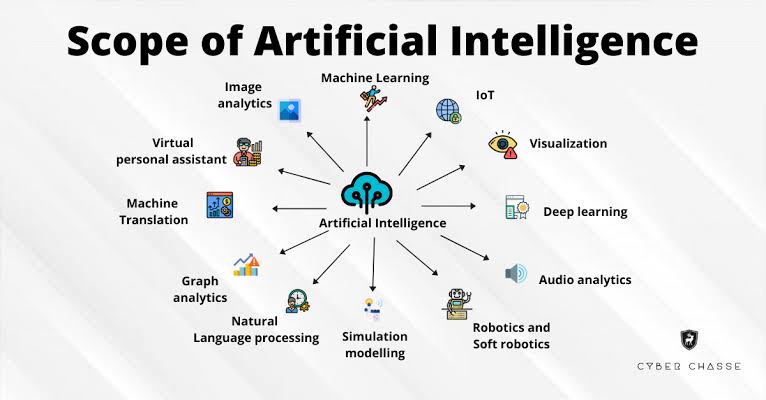
Scope of Artificial Intelligence
Dreaming to Study Abroad? Here is the Right program for you
- AI in Science and Research
AI is making lots of progress in the scientific sector. Artificial Intelligence can handle large quantities of data and processes it quicker than human minds. This makes it perfect for research where the sources contain high data volumes.
AI is already making breakthroughs in this field. A great example is ‘Eve,’ which is an AI-based robot. It discovered an ingredient of toothpaste that can cure a dangerous disease like Malaria. Imagine a common substance present in an everyday item that is capable of treating Malaria; it’s a significant breakthrough, no doubt.
Drug discovery is a fast-growing sector, and AI is aiding the researchers considerably in this regard. Biotechnology is another field where researchers are using AI to design microorganisms for industrial applications. Science is witnessing significant changes thanks to AI and ML. Learn more about the benefits of AI.
- AI in Cyber Security
Cybersecurity is another field that’s benefitting from AI. As organizations are transferring their data to IT networks and cloud, the threat of hackers is becoming more significant.
One triumphant attack can wreak havoc on an organization. To keep their data and resources secure, organizations are making massive investments in cybersecurity. The future scope of AI in cybersecurity is bright.
Cognitive AI is an excellent example of this field. It detects and analyses threats, while also providing insights to the analysts for making better-informed decisions. By using Machine Learning algorithms and Deep Learning networks, the AI gets better and more durable over time. This makes it capable of fighting more advanced threats that might develop with them.
Many institutions are using AI-based solutions to automate the repetitive processes present in cybersecurity. For example, IBM has IBM Resilient, which is an agnostic and open platform that gives infrastructure and hub for managing security responses.
Another field is fraud detection. AI can help in detecting frauds and help organizations and people in avoiding scams. For example, Recurrent Neural Networks are capable of detecting fraud in their early stages. They can scan extensive quantities of transactions quickly and classify them according to their trustworthiness. By identifying fraudulent transactions and tendencies, organizations can save a lot of time and resources. It surely lessens the risk of losing money.
- AI in Data Analysis
Data analysis can benefit largely from AI and ML. AI algorithms are capable of improving with iterations, and this way, their accuracy, and precision increase accordingly. AI can help data analysts with handling and processing large datasets.
AI can identify patterns and insights that human eyes can’t notice without putting in a lot of effort. Moreover, it is faster and more scalable at doing so. For example, Google Analytics has Analytics Intelligence, which uses machine learning to help webmasters get insights on their websites faster.
You can ask Analytics Intelligence a question in simple English, and it would give you a prompt reply. It also provides webmasters with Smart Lists, Smart Goals, Conversion Probability, and other features that help the webmaster in improving the results of their site.
The scope of AI in data analytics is rising rapidly. Another example of AI applications in this sector is predicting outcomes from data. Such systems use the analytics data to predict results and the appropriate course of action to achieve those results. Learn more about AI applications.
As mentioned earlier, AI systems can handle tons of data and process it much faster than humans. So, they can take customer data and make more accurate predictions of customer behavior, preferences, and other required factors. Helixa.ai is a great example of such an AI application. They use AI to provide insights in

 Site Title